
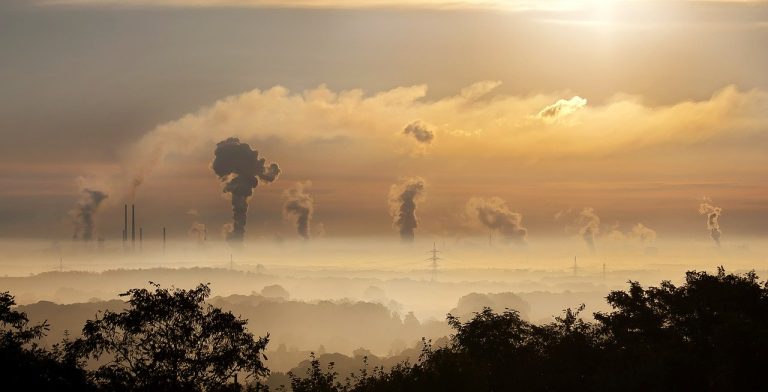
The environment is all around us, and we need to pay close attention to it, especially in industry. Factories release exhaust fumes and environmental pollution, and some of the industrial equipment used in factories also depends on environmental conditions. That’s why you need tools such as environmental measurement instruments.
Which Aspects of Environmental Quality Do Environmental Measurement Instruments Check?
Before we look at what environmental measurement instruments can measure, let’s first get to know them. Environmental measurement instruments are tools that check general atmospheric conditions, such as temperature, humidity, air velocity, air flow, dew point temperature, light, and sound. There are many types of environmental measurement equipment, each used differently depending on the application. The instruments are divided by environmental parameter as follows:
- Temperature Temperature is important in industry because most industrial machinery depends on it. Temperature measures the average kinetic energy of the particles in a substance, which corresponds to how hot or cold the substance is, including the machinery in a factory. Without a temperature meter, your factory could face hazards.
- Humidity If your factory has machinery that constantly releases steam, or you need to monitor the water vapor around you, you need a humidity meter. A humidity meter measures relative humidity, which is the ratio of the amount of water vapor in the air to the amount of water vapor that would saturate the air at the same temperature, or the ratio of the actual water vapor pressure to the saturation vapor pressure. It is expressed as a percentage (%) in units of %RH.
- Air velocity An anemometer measures air velocity and checks airflow conditions, and can also be used to check weather conditions. Anemometers are commonly used in industry to check the air velocity of ducts, fans, motors, and blowers.
- Air flow Air flow meters measure the volumetric flow rate of liquids or gases. Air flow readings relate to the distance the air travels per unit of time, expressed in units such as m/s (meters per second), ft/min (feet per minute), km/h (kilometers per hour), MPH (miles per hour), and knots (1 knot = 1.852 km/h).
- Dew point The dew point, or condensation point, is the temperature at which water vapor condenses into liquid water. Without a dew point meter, moisture may build up inside your factory.
- Sound A sound meter converts sound signals into electrical signals, measured in decibels (dB). There are four types of sound measuring instruments: sound level meters, impulse sound meters, noise dosimeters, and sound frequency analyzers.
- Light A light meter, or lux meter, measures light intensity in foot-candles (fc), lux, or cd/m². These instruments are mostly used to measure light intensity in factories, but they can also be used in offices, schools, and other workplaces.
If you need environmental measurement instruments for your factory, or would like more details on how to use them, browse our selection at https://pico.co.th/.
Posted: Tuesday, February 25, 2020