

What is CEMS, why do industrial plants need it, and how does it relate to the law? Many people may not yet be familiar with CEMS, but everyone has heard of PM2.5 and knows about the problem of air pollution. CEMS is a system that helps tackle pollution and also serves as a combustion efficiency measuring instrument for industrial plants.
PM2.5 dust remains a major problem in Thailand and has driven a steady rise in air pollution over many years. Understanding CEMS and the related laws is therefore important for every industrial plant.
Table of Contents
- What Is CEMS?
- Thai Law and CEMS: What You Should Know
- Types of CEMS
- Components of CEMS
- What Can CEMS Measure?
- What Are the Benefits of CEMS?
- Factories Required to Install CEMS
- Frequently Asked Questions About CEMS
- CEMS: Industrial Solutions from PICO
What Is CEMS?
CEMS (Continuous Emission Monitoring System) is a system that automatically and continuously monitors air pollution emitted from stacks. It collects data on the air released from a stack, then measures and analyzes how polluting the emissions are, so they can be kept within the required standards. CEMS is therefore a type of air quality analyzer.
Different types of factories may use different fuels and produce different kinds of pollution, so the values measured by CEMS vary accordingly.
Air quality standards for industrial plants are something every factory should adhere to, as they can affect the quality of life of most people in the country. The air pollution situation across the country can be tracked through air quality monitoring stations.
Thai Law and CEMS: What You Should Know
CEMS is tied to legal requirements for controlling air pollution in Thailand. It can also be thought of as a stack emissions law, since dust monitors and various air quality analyzers are used to measure the air emitted from stacks.
Under the law, CEMS requirements specify that industrial plants falling within the scope must install instruments or equipment that automatically measure whether the air from stacks that continuously emit smoke is polluting.
The Ministry of Industry also specifies that the values to be monitored through CEMS may vary depending on the type of factory, the fuel used, or the nature of the pollution it may produce.
Industrial plants required to use CEMS are divided into 13 groups based on production units and size. A new Ministry of Industry notification has been issued to replace the previous one: the “Notification of the Ministry of Industry on Requiring Factories to Install Special Instruments or Equipment to Report Air Pollution from Factory Stacks B.E. 2565 (2022)” (CEMS 2565), so that factory air quality monitoring is carried out properly and in line with the current situation.
Types of CEMS
There are currently two main types of CEMS commonly used to monitor air pollution:
- Extractive System
- In-Situ System
Extractive System
An extractive CEMS draws gas from the stack and passes it through analytical instruments to determine how polluting the stack emissions are. This system needs a sampling section to obtain the highest-quality samples, at a humidity and temperature suitable for analysis and free from interference such as unrelated dust particles.
This type of CEMS may have higher maintenance costs than the other type because it has many components. However, it is robust, hard to damage, and has a fairly long service life, and even if damage occurs, its separate components are easy to repair. Another advantage of extractive CEMS is that it can analyze emissions from several stacks at the same time.
In-Situ System
An in-situ CEMS analyzes the air directly at the stack, without needing to take samples to an analyzer elsewhere. As a result, it can analyze only one stack. This type of CEMS is easy to maintain because it has few components, but it is also easily damaged and difficult to repair, since the equipment is installed inside the stack.
Components of CEMS
An extractive CEMS has three main components, while an in-situ CEMS does not transfer samples elsewhere. The three main components of a typical CEMS are as follows:
Sampling Interface / Sample Delivery System
The first part of a CEMS is the sampling and delivery section, which keeps gas samples in the best possible condition for analysis. It includes equipment for drawing gas out of the stack, gas transfer lines, coolers for removing water from the gas, and other equipment.
Examples of sampling and delivery equipment include:
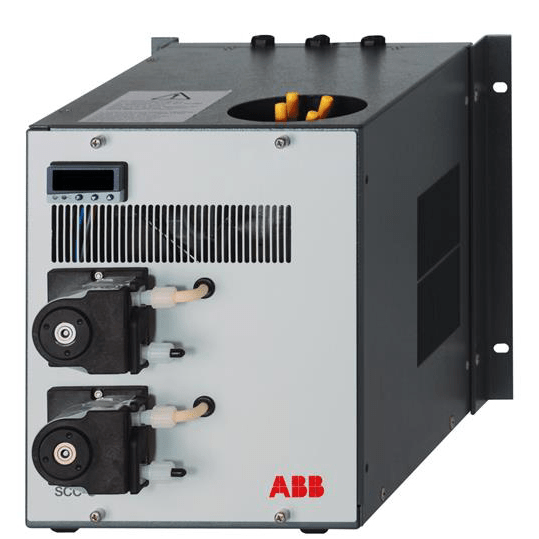
SCC-C Cooler
Removes moisture and water vapor from the gas to keep it in optimal condition.
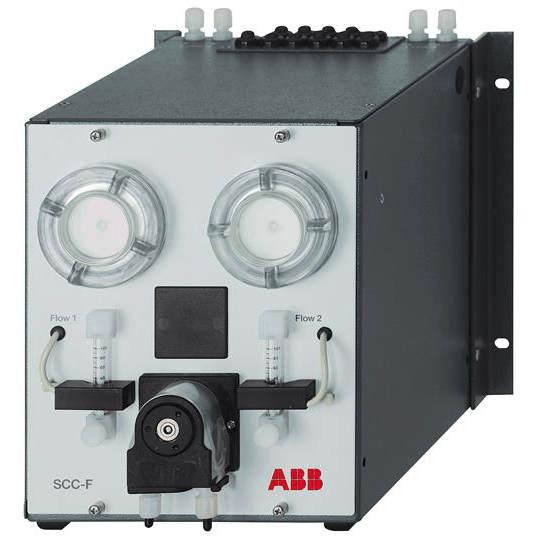
SCC-F Feed Unit
Collects gas samples and delivers them for analysis.
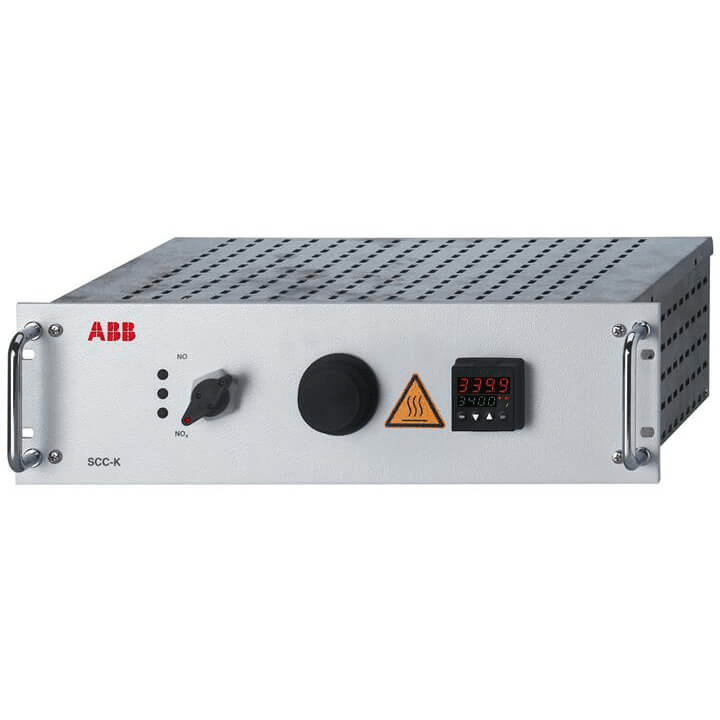
SCC-K NOX Converter
Converts nitrogen dioxide (NO2) into nitric oxide (NO).
Analyzer
The analyzer section of a CEMS differs from a particle counter, because the analyzer measures the amount and type of the various components in the gas, such as CO, NO, SO2, O2, CO2, CH4, H2S, NH3, HF, H2O, or HCl. Examples of analyzers include:
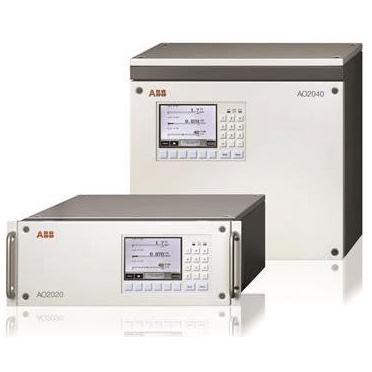
AO2000 Series
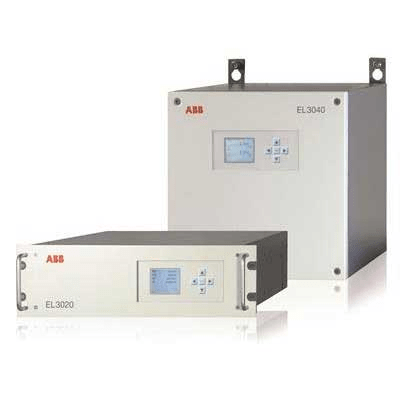
EL3000 Series
If you’d like to know how CEMS differs from a particle counter, see our article on particle size analyzers.
Data Acquisition System
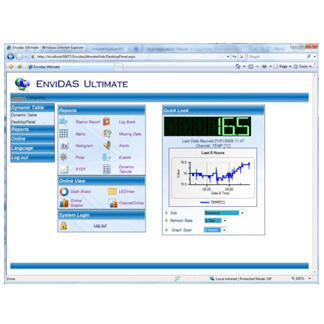
The final component of a CEMS is the data acquisition system, which presents the analysis and measurement results from the other components, for example the Envidas Ultimate.
Download our full product catalog here
Combustion Efficiency Measurement Product Catalog
What Can CEMS Measure?
CEMS can measure many parameters, including:
- Opacity, measured in percent or milligrams per cubic meter
- Particulates, measured in milligrams per cubic meter
- Sulfur dioxide (SO2), measured in parts per million
- Oxides of nitrogen (NO2), measured in parts per million
- Carbon monoxide (CO), measured in parts per million
- Oxygen (O2), measured in parts per million
- Hydrogen sulfide (H2S), measured in parts per million
- Mercury (Hg), measured in milligrams per cubic meter
- Hydrogen chloride (HCl), measured in milligrams per cubic meter
- Stack flow rate, measured in cubic meters per hour
- Stack temperature, measured in degrees Celsius
CEMS readings begin to indicate a dangerous oxygen level when oxygen is too low compared with other toxic gases, such as sulfur dioxide, nitrogen dioxide, carbon monoxide, hydrogen sulfide, hydrogen chloride, or mercury.
What Are the Benefits of CEMS?
CEMS greatly benefits industrial plants themselves, as well as the environment and people’s quality of life. It plays an important role that affects all living things around the world. The benefits of CEMS include:
- CEMS is a legal requirement, so complying with the law makes it easier for industrial plants to coordinate with government agencies and avoid minor problems in the future.
- CEMS helps improve combustion efficiency, as it shows you the current combustion performance of your stack and highlights areas for improvement based on the values analyzed from the stack gases.
- CEMS helps you spot abnormalities in the stack sooner, for example by showing immediately whether combustion efficiency has dropped.
- CEMS allows the government to monitor the combustion quality of each industrial plant and step in to control or resolve problems promptly.
- CEMS helps reduce the release of pollution from industrial plants into the environment, because when pollution occurs, it can be analyzed and identified immediately, so it can be stopped and corrected in time.
- CEMS helps improve the quality of life of local residents, sparing them from air pollution such as PM2.5 and from breathing in toxic gases that harm their health.
As you can see, CEMS offers many benefits and helps people, the environment, the government, and industry alike. Choosing and using CEMS correctly is therefore very important.
Factories Required to Install CEMS
Many types of factories should install CEMS, including:
- Power plants with a generating capacity of more than 29 megawatts
- Pulp and paper mills
- Iron smelting, iron casting, or steel melting plants with a production capacity of more than 100 tons per day
- All petroleum refineries
If you own one of these types of industrial plants, you should install CEMS as soon as possible to comply with Thailand’s air pollution control laws.
Frequently Asked Questions About CEMS
Even after learning about CEMS, many people may still have some questions, such as what online CEMS is or how CEMS can help with PM2.5. Let’s look at the answers together.
What Is an Online CEMS?
An online CEMS is a CEMS updated for the modern era with technology that lets you track its analysis results at any time, wherever you are and whenever you want to check. Results can be checked from both computers and mobile phones, making it an even better fit for the way industrial plants work.
How Does CEMS Help with PM2.5?
CEMS helps tackle PM2.5 because, although PM2.5 dust has many causes, one of the main ones is pollution released by industrial plants. Installing CEMS in all qualifying industrial plants helps reduce emissions of hazardous gases and toxic dust, easing the PM2.5 problem.
CEMS: Industrial Solutions from PICO
CEMS is an important tool for industrial plants, as it improves combustion efficiency and reduces the chance of air pollution. If you would like more information or to purchase CEMS-related products, PICO, a specialist in industrial instruments, is happy to advise you.
PICO supplies a wide range of products for many industries, from CEMS and air pollution measurement instruments to many other types of industrial equipment, so we can provide comprehensive, end-to-end solutions for industrial plants.
PICO also has well-trained experts ready to serve you 24 hours a day, so buying CEMS products or getting further advice is easy. After your purchase, our team provides professional installation to ensure every product you buy works properly and at full efficiency. Contact us at +662 939-5711 (12 lines), +662 513-2333 (12 lines), or +662 939-4207-8.