

Today, industrial plants are increasingly adopting technology to support production. One of the most important of these technologies is the Programmable Logic Controller, or PLC, a device that controls the operation of machinery and work processes. Because its capabilities meet these needs so well, the PLC has become a key part of the automation system that drives factories into the Industry 4.0 era, where every process can be digitalized efficiently.
Table of Contents
- What Is a PLC (Programmable Logic Controller)? Everything You Need to Know
- How a PLC Works
- Types of PLC
- What Makes Up a PLC? The 6 Main Components
- What Are the Benefits of a PLC? Why Do Industrial Plants Need PLCs?
- Limitations of PLCs
- Summary: PLCs Are the Future of Industry 4.0 Factories
What Is a PLC (Programmable Logic Controller)? Everything You Need to Know
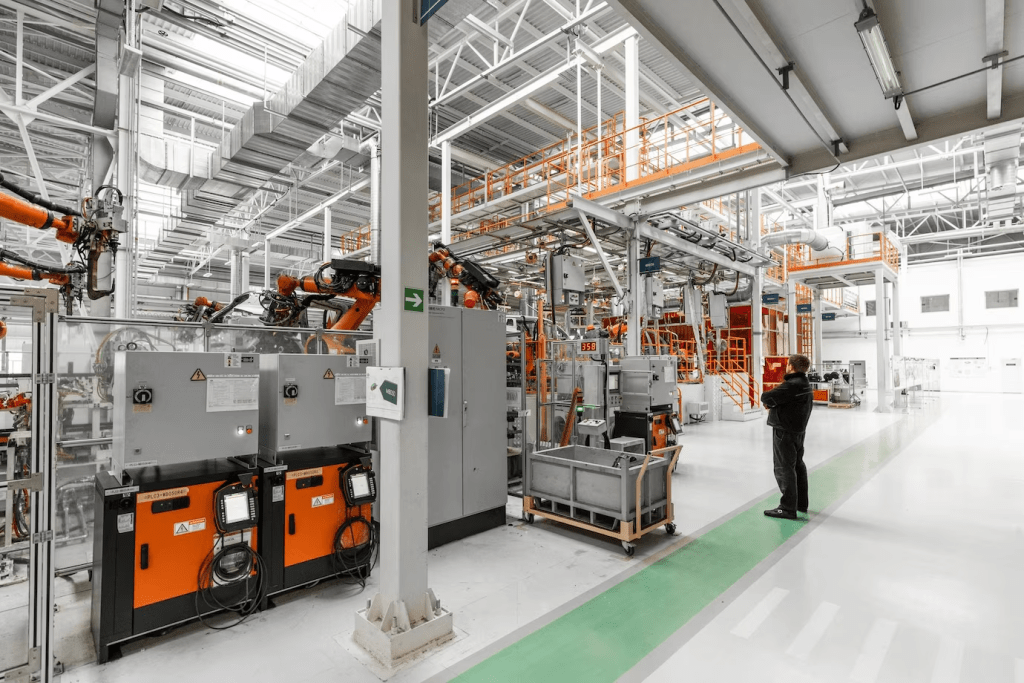
A PLC is a computer device designed specifically for use in industrial plants. Its key component is a microprocessor, which is responsible for directing the other parts. PLCs can be used for assembly, process monitoring, and every other activity involved in the production process.
Another advantage of PLC control is that you can create programs or specific commands so the PLC can perform tasks beyond its general functions. These may be commands related to particular characteristics of the products made in each factory, such as pressure checks or temperature measurement.
How a PLC Works
Now that you know what a PLC is, let’s look at how it works. A PLC starts by receiving data from connected machines or devices (Input). This data is then checked against the Logic, which is the program that has been configured. The PLC then sends the verified data to output devices (Output) to control their status as specified, such as switching motors or valves on and off. This allows processing to be fast and accurate according to the configured program.
Types of PLC
Today, PLCs (Programmable Logic Controllers) have been continuously developed into many varieties, each with its own strengths and structure. Whatever the type, a PLC program is a great tool for making your factory’s production process more efficient and convenient. Let’s look at the most popular types of PLC controllers.
Modular PLC
A modular PLC is a type of PLC made up of separate modules that can be added or replaced as needed, such as 1756 ControlLogix I/O Modules and MicroLogix Expansion I/O. Replacing a module does not affect the overall system.
The advantage of modular PLC automation is its flexibility: it can be adapted to suit the application and the size of the system. This makes it ideal for large industrial plants, factories with fairly complex systems, or factories that frequently change their processes, such as building automation control or transportation system control.
Compact PLC
A compact PLC is a small, compact type of PLC that requires little installation space. It comes as a single unit with its components built into the device, such as Compact I/O Chassis-Based Modules and 5069 CompactLogix 5480 Controllers. The advantages of this type are that it is easy to use, install, and maintain, making it suitable for small factories or limited spaces.
What Makes Up a PLC? The 6 Main Components
A PLC consists of several components, each with a different function. To choose the right PLC for your application, you should first understand each part. The main components of a PLC are:
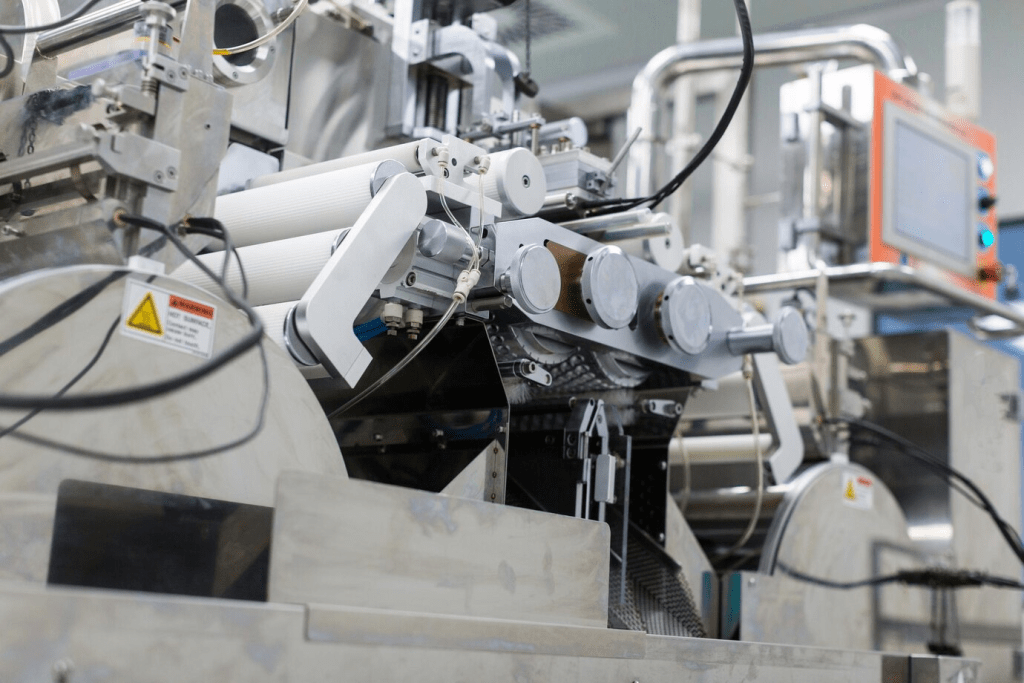
Microprocessor
The microprocessor, or central processing unit (CPU), is the main brain of the PLC. It converts the input signals from various devices into digital data, which is then processed according to the written program. It is installed in PLC devices such as MicroLogix 1200 Programmable Logic Controller Systems. The microprocessor also controls the operation of various devices based on the processing results.
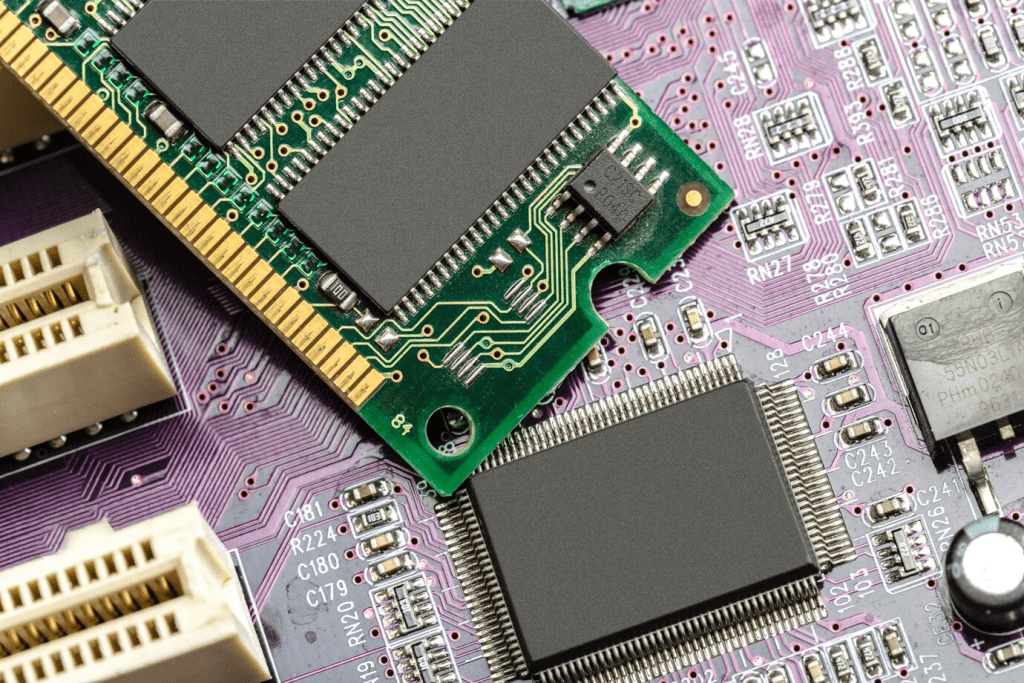
Power Supply Equipment
The power supply converts alternating current (AC) voltage into direct current (DC) voltage, delivering stable electrical power suited to the PLC system and supplying power to the PLC’s other components, such as the CPU, input unit, and output unit.
Programming Device (Computer Programming)
The programming device is used to enter the necessary commands or programs into memory, so the PLC can act as an intelligent controller that performs the required tasks. It is also used to check, edit, and download PLC programs. This device comes built into PLCs such as MicroLogix 1100 Programmable Logic Controller Systems.
Program
The program is a set of instructions written to control the PLC’s operation. It is stored in memory and executed by the microprocessor. PLC programs are written by PLC programmers, experts in computer programming, using specialized languages designed to make PLC programming easier.
Processor
The processor is the PLC’s central processing unit. It processes data from input devices, which are external devices such as sensors and switches. It then sends control signals to output devices, such as motors and valves, to control or manage various processes in the factory. The processor operates according to a pre-written program.
Interface
The interface connects the PLC to other devices such as sensors, switches, motors, and valves. It converts electrical or logic signals from these devices into digital data that can be sent to the PLC, and converts digital data from the PLC back into signals that can be sent to the devices.
What Are the Benefits of a PLC? Why Do Industrial Plants Need PLCs?
A PLC is a versatile system widely used to control and monitor processes in industrial plants. Its advantages and benefits include:
- Its programs have been continuously developed and tested, so you can be confident in the system’s stability and performance.
- It helps improve the performance of various industrial measuring instruments.
- It uses simple programming languages, making it easy and straightforward to design programs and enter commands.
- Many models are available for different applications, so you can choose the one that fits.
- A wide range of price points is available to suit your budget and the size of your operation.
- It has few components, so problems can be fixed and maintenance carried out quickly.
- Its data storage is durable enough to withstand various industrial environments.
- It is highly efficient and consumes little power, helping reduce costs and electricity use.
Limitations of PLCs
Although PLCs have many outstanding features, they also have some limitations you should be aware of:
- Their capacity for processing data and controlling devices may not be enough for some large, complex industries, such as flight control or satellite control systems, which may require higher-performance control systems.
- PLC memory is limited, depending on the model and type of device. After a period of use, the memory may become full, especially when large amounts of data need to be stored.
Summary: PLCs Are the Future of Industry 4.0 Factories
A PLC is a digital control device widely used in industrial plants. Its main function is to receive data from various devices and send control signals to the relevant equipment, which is why PLCs continue to be so popular. Business owners interested in PLCs can order or ask for more information from PICO, a provider of imported measuring instruments and machine control systems for industry, or visit https://pico.co.th/
Interested in PICO products? Find out more here: